Natural dyes
India's great tradition of vegetable dyeing was unequalled anywhere in the world. However the European development of synthetic dyes in the mid 19th century ended the export market for colourful textiles as well as the dyestuffs. The technical skills of vegetable dyeing were lost to all but a minority of textile craftsmen. However today there is renewed interest in natural dyeing due to bans being imposed by European Governments, because of health risks from numerous synthetic dyes that they originally developed.
Dyer-designer
Jagada Rajapa is a weaver-designer who has been working with weavers in remote villages helping them to look at their traditional designs and select pleasing colour combinations. Since 1986 she has been giving workshops in natural dyeing to many weavers, trying to rebuild the skills long lost. She has been developing collections of saris from both Orissa and Andra Pradesh which exemplify the best in workmanship and design. Here she shows a collection of silk yarn dyed entirely with natural dyestuffs, such as indigo, madder, pomegranate, lac, walnut, tea and katchu
Producer
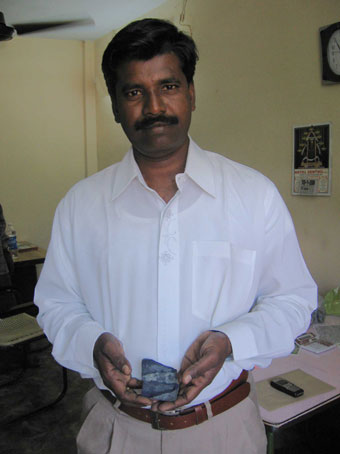
S. Mohanraj shows a sample of the natural indigo which his family business produces in Tamil Nadu.Their output is 3000 kilos per year. clicksaravanan@yahoo.com
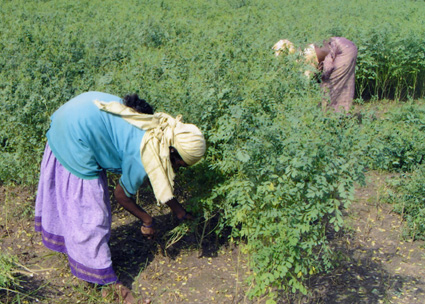
Here women are cutting the Indigofera tinctorium plants that produce indican, the substance which is used to make the indigo dye.
OTHER RELATED ARTICLES KALAMKARI | BLOCKPRINTING